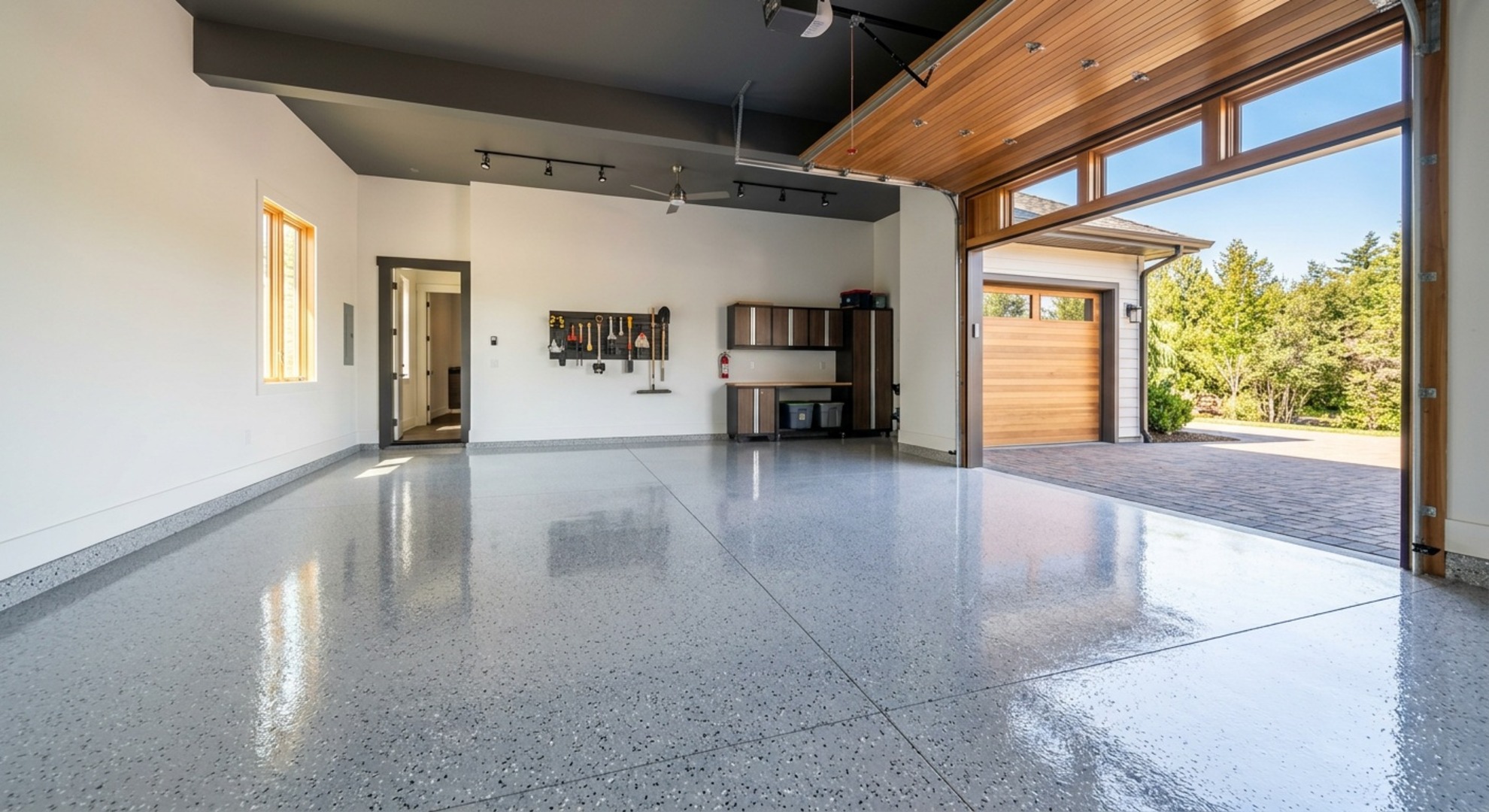
Epoxy Garage Floor Centennial CO — Local Installers, 2026 Pricing
A professional epoxy garage floor in Centennial, Colorado costs $1,595–$3,337 for most homeowners, with a national average of $2,441. A typical 2-car garage runs $1,100–$4,300 installed — including surface prep, color-flake broadcast, and a UV-stable topcoat. We connect Centennial homeowners in zip codes 80112, 80121, and 80122 (and surrounding 80015 / 80016) with screened local contractors who specialize in Colorado's demanding high-altitude climate. Fill out the form for a free, no-obligation quote within 24 hours.
Epoxy Garage Floor Cost in Centennial CO (2026)
Pricing varies by garage size, coating system, and slab condition. Use this table as a starting benchmark — your free quote will reflect Centennial-specific labor rates.
| Garage Size | Approx. Sq Ft | Typical Cost Range | Best Coating for CO |
|---|---|---|---|
| 1-Car Garage | 200–250 sq ft | $600–$2,200 | Standard Epoxy + Poly Topcoat |
| 2-Car Garage | 400–500 sq ft | $1,100–$4,300 | Full-Flake Polyaspartic System |
| 3–4-Car Garage | 600–1,200 sq ft | $1,700–$9,500 | 100%-Solids Polyaspartic |
| Per Sq Ft (installed) | Any size | $3–$12 / sq ft | Varies by system & prep |
Pricing reflects installed cost including surface prep, primer, decorative broadcast flake, and UV-resistant topcoat. Crack repair and concrete patching billed separately. Estimates are ranges — your contractor quote will be specific to your slab and Centennial-area labor costs.
Epoxy Floor Services Available in Centennial, Colorado
Every contractor in our Centennial network is vetted for licensing, insurance, and demonstrated experience with Colorado-rated coating systems. We match you to the right specialist for your specific project.
Full-Flake Epoxy Systems
The most popular choice for Centennial homeowners in 80112 and 80121: a multi-layer system with diamond-ground concrete, epoxy base coat, decorative vinyl flake broadcast, and a UV-stable polyaspartic or polyurea topcoat. Hides imperfections, handles daily thermal cycling, and delivers a showroom finish that lasts 10–15 years.
Polyaspartic / Polyurea Coating
The highest-performance coating available for Colorado garages in 80122 and the broader Centennial area. 100%-solids polyaspartic cures in 1–4 hours, tolerates -40°F, and does not yellow under Colorado's 300+ annual sunny days. Ideal for homeowners who need fast turnaround or plan to coat during shoulder-season temperatures.
Concrete Repair & Surface Prep
No coating system performs well on a compromised slab. Our network contractors provide crack injection, spalling repair, and professional shotblasting or diamond grinding before any product is applied. Proper surface prep is the single biggest predictor of coating longevity — especially in Colorado, where freeze-thaw expansion stresses every hairline crack each winter.
Ready to Transform Your Centennial Garage?
Tell us your garage size and zip code. We match you with a screened local installer within 24 hours — no spam, no high-pressure sales, no obligation.
Get My Free Quote Now →Why Colorado's Climate Makes Epoxy Selection Critical for Centennial Garages
Most generic epoxy guides are written for sea-level climates with mild winters. Centennial sits at approximately 5,600 feet in the South Denver suburbs, subjecting garage floors to conditions that will prematurely fail inferior coating systems. Our network contractors understand every one of these Front Range variables — and formulate accordingly.
Altitude: Faster Cure, Shorter Window
At 5,280–5,600 feet, lower air pressure reduces the pot life and open time of epoxy products by 15–25% compared to sea-level applications. This is actually an advantage for homeowners — projects complete faster — but it requires experienced applicators who can work efficiently before the chemistry begins to set. DIY epoxy kits from big-box stores rarely account for high-altitude cure behavior, leading to uneven leveling and fish-eye defects. Our Centennial network contractors are trained and equipped specifically for Front Range altitude conditions.
Freeze-Thaw Cycles: Standard Epoxy Can Delaminate
Centennial averages over 100 freeze-thaw cycles per year. Moisture infiltrates hairline cracks in concrete, freezes, expands, and contracts — a relentless mechanical stress that causes rigid epoxy films to pop, bubble, and peel within 1–3 winters if the wrong product is selected. Polyaspartic coatings formulated to handle temperatures down to -40°F remain flexible through each cycle, bonding through the stress rather than fracturing. This is the single most important reason to choose a Colorado-trained installer over a national franchise crew using off-the-shelf products.
UV Exposure: 300+ Sunny Days Require UV-Stable Formulas
Colorado receives more annual sunshine than Miami or Los Angeles. Standard aromatic epoxies — the kind found in most DIY kits — begin to yellow and chalk within one season of UV exposure, even inside a garage with doors that open throughout the day. Our partner contractors use exclusively aliphatic polyaspartic or aliphatic polyurethane topcoats that maintain color clarity for 10+ years under Colorado's intense solar radiation. UV stability is a baseline requirement for Centennial garage floors, not an optional premium.
Temperature Swings: 50°F+ Daily Delta in Spring
Centennial's spring and fall shoulder seasons routinely see overnight lows below 30°F and afternoon highs in the low 70s — a 40–50°F swing within 12 hours. Concrete slabs expand and contract with every cycle, and the garage coating must flex with the substrate. Flexible-chemistry polyurea topcoats with elongation ratings of 80–300% accommodate this movement. Rigid two-part epoxies (elongation: 2–5%) will develop micro-cracks at coating-to-slab interfaces within a single season. This is why experienced Colorado installers virtually never finish a garage floor with epoxy alone.
The Bottom Line for Centennial Homeowners
A garage floor coating in Centennial, CO is not a commodity product. The specific combination of altitude, UV load, freeze-thaw stress, and temperature cycling means that only a contractor with documented Colorado experience and climate-rated products will deliver a coating that lasts. Every installer in our referral network is vetted against these exact criteria before we route a single lead their way.
Why Source Your Centennial Epoxy Installer Through Our Network?
Colorado-Specific Vetting
Every contractor in our network is screened for active Colorado licensing, general liability insurance, and documented experience with altitude-rated and UV-stable coating systems — not just generic epoxy installation credentials.
No Sales Pressure, Ever
We are a referral network — not a contractor. We do not upsell products, push warranties, or pressure timelines. Our job ends when we connect you with the right local professional. The relationship is yours from that point forward.
Multiple Quotes, One Form
A single 60-second form connects you with up to three screened Centennial-area installers. Compare quotes, coatings, and timelines on your own schedule without submitting your contact info to multiple websites.
Serving All Centennial Zip Codes
Our installer network covers the full Centennial footprint: 80112 (Meridian / DTC South), 80121 (Littleton border), 80122 (County Line corridor), 80015, and 80016 (E-470 / Smoky Hill). No zones excluded.
Frequently Asked Questions About Epoxy Garage Floors in Centennial
Real questions from Centennial homeowners in 80112, 80121, and 80122 — answered with Colorado-specific context you will not find on national contractor sites.
How much does it cost to epoxy a garage floor in Colorado?
+
In Colorado, epoxy garage floor installation typically runs $1,595–$3,337 for most residential projects, with a national average of $2,441. High-altitude climate requirements — including UV-stable and flexible-chemistry coatings to handle Colorado's freeze-thaw cycles — can push costs toward the upper range. Budget $3–$12 per square foot installed, depending on coating type, garage size, and existing slab condition. Always get at least three local quotes before committing.
How long does an epoxy garage floor last?
+
A professionally installed epoxy garage floor lasts 5–10 years under normal residential use. Polyaspartic and polyurea topcoats extend that lifespan to 15–20 years because they resist UV yellowing and stay flexible through Colorado's extreme temperature swings. Longevity depends most heavily on proper surface preparation (shotblasting or diamond grinding) and correct product selection for the Front Range climate.
Is epoxy or polyaspartic better for garage floors?
+
For most Centennial, CO garages, polyaspartic is the superior long-term investment. It cures in 1–4 hours versus 24–72 hours for standard epoxy, tolerates temperatures down to -40°F, and resists yellowing under Colorado's 300+ annual sunny days. Standard epoxy works well for temperature-stable interior spaces, but polyaspartic is the professional choice for Colorado's extreme climate variability and altitude conditions.
What is the difference between epoxy and polyurea garage floor coating?
+
Epoxy is a rigid, two-part resin system that bonds well to concrete but is UV-sensitive and slow to cure. Polyurea (often sold as polyaspartic) is a more flexible, faster-curing polymer built for impact resistance and extreme temperature cycling. In Colorado, polyurea coatings are preferred because they expand and contract with the concrete slab through the state's 50°F+ daily temperature swings without delaminating or developing stress cracks.
Do I need to move everything out of my garage for epoxy coating?
+
Yes — the entire floor must be completely cleared before work begins. Contractors need unobstructed access to grind or shotblast the concrete, apply primer, broadcast color flake, and roll topcoat. Most 2-car garage jobs in Centennial are completed in one to two days. Plan to keep vehicles and stored items out for at least 24–72 hours after the final topcoat, depending on product type and ambient temperature at the time of installation.
Can you epoxy a garage floor in cold weather in Colorado?
+
Standard water-based epoxies require surface and air temperatures above 50°F — a real constraint for Centennial winters. Polyaspartic coatings are the professional solution for cold-weather Colorado installations; they cure reliably down to 0°F and are unaffected by the moisture from snowmelt that routinely undermines epoxy adhesion in cold months. Most reputable Centennial installers offer year-round scheduling using cold-rated polyaspartic products.
How long after epoxy can I park my car?
+
For standard epoxy systems, most Colorado installers recommend waiting 72 hours before parking vehicles. The lower humidity and high UV at 5,280+ feet can accelerate surface cure while leaving the subsurface softer for longer than sea-level applications. Polyaspartic topcoats reach drive-on hardness in as little as 24 hours. Parking too early is the leading cause of tire marks and surface damage — always follow your installer's product data sheet recommendation.
Does an epoxy garage floor increase home value?
+
Yes. In the Centennial, CO real estate market — where buyers expect finished, move-in-ready homes — an epoxy garage floor is a recognized selling point. Real estate agents and appraisers consistently list finished garages as value-adds. Most Centennial sellers recover the full project cost and report faster offers from buyers who appreciate the durable, professional-looking surface compared to bare gray concrete.
What is the average cost per square foot for epoxy garage floor?
+
Professional epoxy garage floor installation averages $3–$12 per square foot installed, including surface prep, primer, decorative color flake, and a UV-resistant topcoat. Basic single-color epoxy starts around $3–$5/sq ft. Full-flake polyaspartic systems run $7–$12/sq ft. In Colorado, UV-stable formulas are a code-of-care minimum — not an optional upgrade — so budget toward the mid-to-upper range for a finish that will hold up to the altitude and sunshine.
How much does a 2-car garage epoxy floor cost in Centennial?
+
A standard 2-car garage (400–500 sq ft) in Centennial, CO typically costs $1,100–$4,300 for a complete epoxy or polyaspartic coating system. The range reflects coating type, slab condition, and installer tier. Most Centennial homeowners pay $1,800–$2,800 for a quality mid-range full-flake system with a polyaspartic topcoat — the optimal choice for Colorado's altitude, UV load, and freeze-thaw climate.
Get Matched with a Screened Epoxy Installer in Centennial, CO
2-car garage estimates starting around $1,100. UV-stable, freeze-thaw-rated coatings. Serving 80112 · 80121 · 80122 · 80015 · 80016.
Get My Free Quote →No obligation. We match you — you decide.