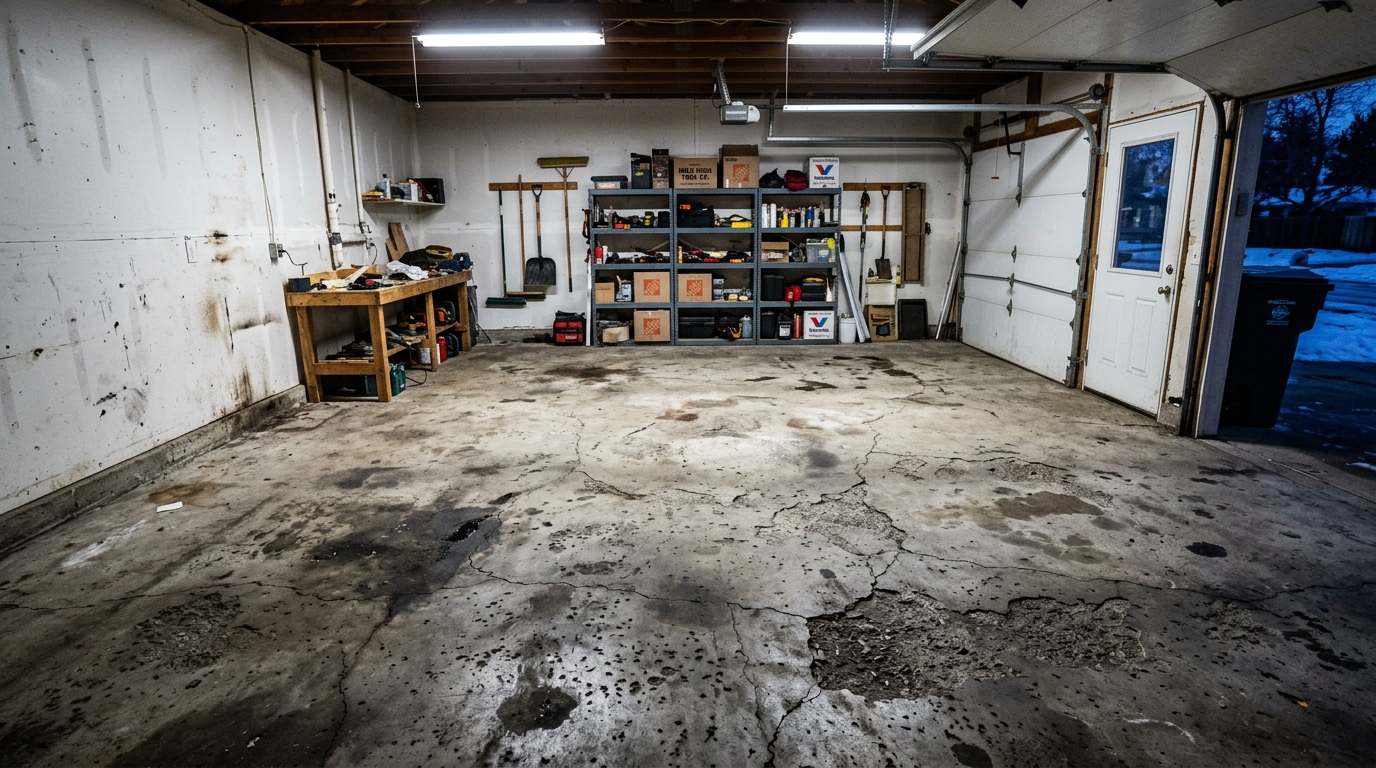
 BEFORE
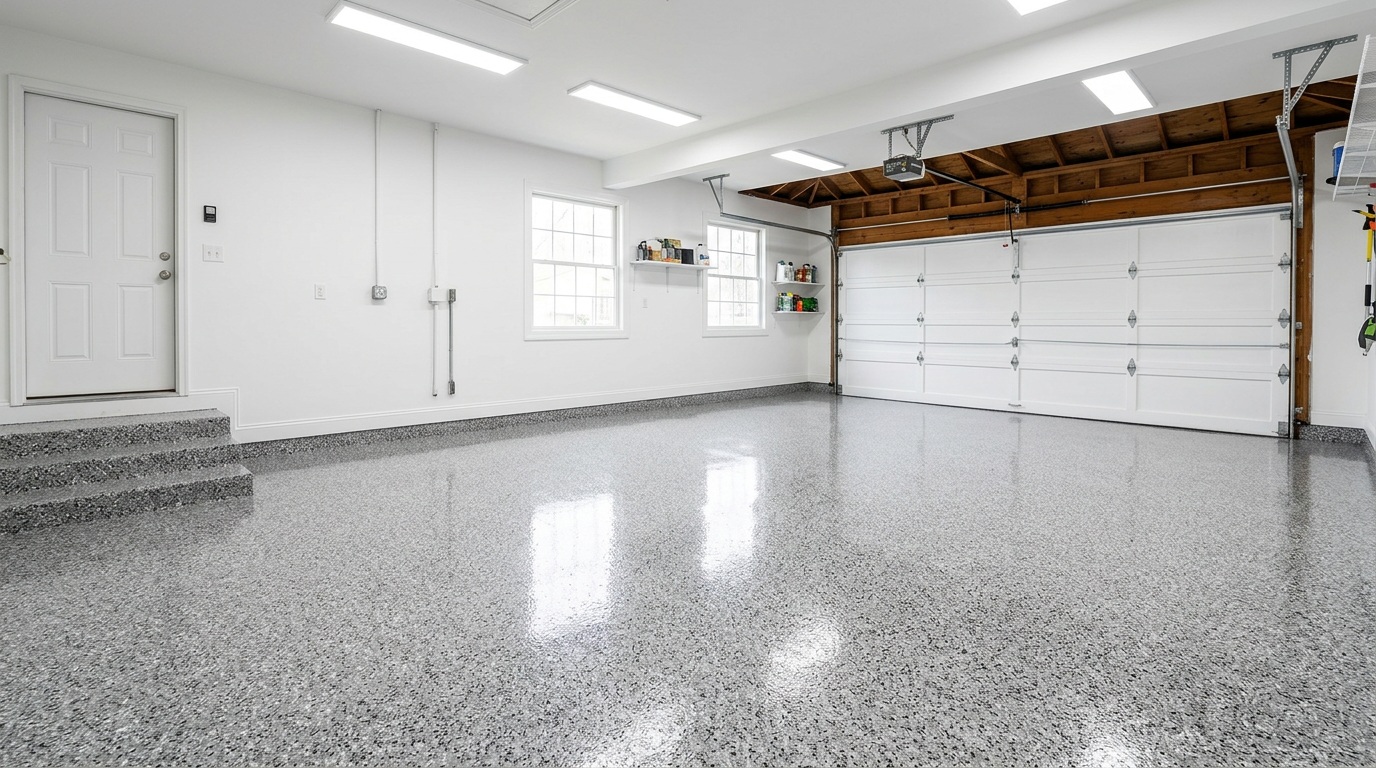 AFTER
AFTERHow Professional Epoxy Garage Floor Installation Works in Colorado
Colorado homeowners researching epoxy garage floors quickly discover that the process is more involved — and more climate-dependent — than generic guides suggest. Altitude affects cure chemistry. Freeze-thaw cycles destroy coatings applied with inadequate surface preparation. UV exposure at 5,000–8,000 feet yellows inferior topcoats within a single season. This guide walks you through every step of a professional installation, what questions to ask before hiring, and exactly what separates a coating that lasts 15 years from one that peels before your next snowstorm.
The 8-Step Professional Installation Process
This is the complete process a qualified Colorado epoxy contractor follows. Each step matters — skipping or shortcutting any one of them is the primary reason epoxy floors fail prematurely in the Front Range climate.
Surface Assessment & Moisture Testing
Every professional installation begins with a thorough inspection of your slab. The contractor checks for cracks, spalling, previous sealers, oil contamination, and — critically in Colorado — moisture vapor transmission. Colorado's clay-heavy soils and snowmelt infiltration can trap moisture beneath the slab year-round. A calcium chloride or relative humidity probe test determines whether the slab is dry enough to accept coating. Skipping this step is the number-one cause of epoxy delamination in Colorado garages within the first two winters.
Crack Repair & Concrete Patching
Hairline cracks, control joint deterioration, spalling, and pitting are repaired before any grinding begins. Colorado's 100+ annual freeze-thaw cycles mean that cracks sealed at the surface but not properly filled at depth will re-open and telegraph through the coating. Professional repair involves injecting low-viscosity epoxy filler into structural cracks and using a semi-rigid polyurea filler in control joints that must remain functional. This step adds time and cost but is non-negotiable for a coating that survives a Colorado winter.
Concrete Grinding or Shot Blasting (Surface Preparation)
This is the most critical step in the entire process. Professional contractors use a diamond grinder or shot blast machine to create a mechanical adhesion profile (CSP 2–4) across the entire slab surface. Shot blasting — which propels steel pellets at high velocity — is the gold standard for Colorado garages because it opens the concrete pores uniformly without introducing water. At Colorado's altitude, acid etching (the cheap alternative) produces inconsistent results on the aged concrete in homes built before 2005 and leaves residual salts that compromise adhesion in freeze-thaw conditions.
Primer Coat Application
A 100%-solids epoxy primer is applied to the prepared slab, penetrating the opened concrete pores and forming a permanent chemical and mechanical bond. Primer is especially important in Colorado garages where slab porosity varies due to altitude-influenced concrete batching practices used in the 1980s–2000s construction boom. The primer coat also serves as a moisture barrier, sealing residual vapor transmission before the decorative base coat is applied. Primer cure time at Colorado altitude runs 2–4 hours depending on ambient temperature.
Base Coat / Color Coat Application
The primary epoxy or polyaspartic base coat is rolled onto the primed surface using a notched squeegee and back-rolled with a 3/8" nap roller to ensure consistent mil thickness. Colorado installers formulate base coats for the local altitude — lower atmospheric pressure affects pot life and open time, so experienced crews mix smaller batches and work systematically from the back of the garage to the door. Base coat color is the foundation of your finished floor's appearance, visible in any areas where decorative flake is applied lightly.
Decorative Vinyl Flake Broadcast
While the base coat is still wet, installers broadcast decorative vinyl flake chips across the surface by hand. Coverage density ranges from a light sprinkle (20–30% coverage, showing base color through the flake) to a full broadcast (100% coverage, completely hiding the base color). Full broadcast — the most popular choice for Colorado garage floors — creates maximum surface texture, improving slip resistance on wet or snowy days when Colorado homeowners track in slush. Flake also hides minor imperfections and everyday tire marks that would be visible on a solid-color floor.
Topcoat Application (Polyaspartic or Polyurethane)
After the base coat and flake fully cure, any excess loose flake is scraped and vacuumed, and a clear topcoat is applied as the final protective layer. For Colorado garages, the topcoat must be an aliphatic polyaspartic or aliphatic polyurethane — not a standard aromatic epoxy clear, which will yellow within one season under Colorado's 300+ annual sunny days. The topcoat determines abrasion resistance, UV stability, and chemical resistance. Quality topcoats add 10–15 years to the system's functional lifespan compared to skipping or using a sub-standard clear.
Cure & Final Inspection
The completed system requires a full cure period before vehicle use. Standard epoxy systems need 72 hours minimum at Colorado altitude before light vehicle traffic; full hardness develops over 7 days. Polyaspartic topcoats reach drive-on hardness in 24 hours. During the cure, keep garage doors closed to prevent debris contamination and protect the surface from direct sunlight in the first 12 hours. A reputable contractor will do a final walk-through inspection with you, document the job, and provide written warranty terms before collecting final payment.
Project Timeline: What to Expect Day by Day
Plan your garage downtime before the work begins. Here is a realistic timeline for both standard epoxy and polyaspartic systems at Colorado altitude.
Standard Epoxy System
Polyaspartic System
Recommended for CO6 Questions Every Colorado Homeowner Should Ask Before Hiring
Most homeowners get one or two quotes and hire based on price. These questions give you a substantive basis for comparison — and immediately reveal which contractors know what they are doing in the Colorado climate versus who is just chasing the job.
Are you licensed and insured in Colorado?
Colorado requires active state contractor licensing and general liability insurance for flooring work. Ask for the license number and proof of insurance — a legitimate contractor will provide both without hesitation. This protects you if a worker is injured on your property or if installation damage occurs.
Will you shot blast or use diamond grinding — not acid etching?
This single question separates professional Colorado installers from budget operations. Shot blasting or mechanical diamond grinding creates the concrete surface profile required for lasting adhesion in Colorado's freeze-thaw climate. Any contractor proposing acid etching as the primary prep method is using an inferior process for Colorado conditions — walk away.
What topcoat are you applying, and is it UV-stable?
Demand the specific product name and data sheet for the topcoat. It must be an aliphatic polyaspartic or aliphatic polyurethane — not aromatic epoxy clear. Any vague answer like "our proprietary topcoat" without a product data sheet is a red flag. UV stability is non-negotiable for Colorado's solar exposure levels.
Do you test for moisture vapor transmission before coating?
A professional contractor performs a moisture test (calcium chloride or in-situ probe) before applying any coating. Colorado's clay soils and snowmelt create real moisture vapor transmission issues that will cause delamination if the slab fails the moisture threshold. Skipping this test is a contractor cutting corners on a critical quality control step.
What warranty do you offer, and does it cover delamination?
Get the warranty in writing before work begins. It should specifically cover delamination, peeling, adhesion failure, and — for polyaspartic systems — UV yellowing. A minimum 2-year labor warranty is the industry baseline. Contractors offering no written warranty should be disqualified regardless of price.
Can you provide references from Colorado installations in the last two years?
Colorado-specific experience matters. Installers who primarily work in other states or climates may not account for altitude-affected pot life, moisture from snowmelt, or the UV load from Colorado's high-altitude sunshine. Ask for two or three local references with addresses you can drive by to inspect the finished work firsthand.
5 Red Flags That Signal a Bad Epoxy Contractor
The Colorado epoxy market has grown rapidly with the state's housing boom, attracting installers without the climate-specific knowledge or materials to deliver lasting results. Watch for these warning signs during any quote process.
Acid Etch Only Surface Preparation
Acid etching produces inconsistent results on Colorado's aged residential concrete and leaves residual salts that compromise adhesion in freeze-thaw conditions. Any contractor proposing acid etch as the only prep method is delivering a floor that will likely peel within 1–3 winters.
No Moisture Vapor Test Before Coating
Skipping the moisture test is a contractor cutting a critical quality control step. Colorado's clay soils trap moisture beneath slabs year-round — coating over a slab with excessive moisture vapor transmission guarantees delamination bubbles within the first year.
No Clear Topcoat Included in the Scope
An epoxy base coat alone will chalk, yellow, and abrade rapidly under Colorado's UV and daily temperature swings. Any quote that does not explicitly include a UV-stable polyaspartic or polyurethane topcoat is either incomplete or deliberately hiding the full system cost.
Extreme Low Pricing (Under $1.50/sq ft Installed)
Professional surface prep, climate-rated materials, and skilled labor cannot be delivered below approximately $3/sq ft in Colorado's labor market. Quotes dramatically below this floor typically mean inadequate surface preparation, inferior materials, or cut labor hours — all of which result in early coating failure that costs more to remediate than the original project.
No Documented Colorado Experience
Altitude affects cure chemistry, UV exposure accelerates degradation, and freeze-thaw stress tests every adhesion joint differently than sea-level climates. A crew without demonstrated Colorado experience will apply products and processes calibrated for different conditions, producing unreliable results on your specific Front Range slab.
Continue Your Research
Frequently Asked Questions
Colorado-specific answers to the most common process questions from homeowners preparing for their first epoxy installation.
How long does it take to epoxy a garage floor in Colorado?
+
Most standard epoxy systems take two days: Day 1 for prep and coating, Day 2–3 for light foot traffic, Day 7 for vehicles. Polyaspartic systems compress this to a single day — foot traffic in 4–6 hours, vehicles in 24 hours. Colorado's altitude accelerates surface cure but can leave the subsurface softer longer, so observe the full vehicle timeline even if the floor feels hard to the touch.
How do I prepare my garage for epoxy coating?
+
Completely empty the garage floor of vehicles, shelving, floor mats, and stored items. The contractor needs 100% slab access for grinding and coating. Do not power-wash the floor before the appointment — introducing moisture in the days prior can compromise adhesion, especially in Colorado where snowmelt can already keep slabs damp. Point out oil stains and known cracks during the initial walkthrough so your contractor can plan appropriate pre-treatment.
What is shot blasting and why does it matter for Colorado garage floors?
+
Shot blasting uses a self-contained machine that propels steel pellets at high velocity across the concrete, creating a uniform mechanical adhesion profile without introducing water. It is significantly superior to acid etching for Colorado's aged residential concrete — producing 3–5x stronger adhesion that survives freeze-thaw cycling. Always confirm your contractor uses shot blasting or diamond grinding, not acid etch, before signing any contract.
How long until I can park my car after epoxy?
+
Standard epoxy: 72 hours minimum before parking at Colorado altitude. Polyaspartic: 24 hours. Never park early — it is the leading cause of permanent tire marks and surface damage that requires full recoating to fix. Colorado's altitude affects subsurface cure differently than sea level, so the floor may feel hard before it has reached vehicle-bearing hardness.
What warranty should I expect on a garage floor coating in Colorado?
+
A minimum 2-year labor warranty covering delamination, peeling, and adhesion failure is the industry baseline from a reputable Colorado contractor. Premium polyaspartic systems carry 5–15 year product warranties when installed by certified applicators. Get it in writing before work begins, and confirm the warranty explicitly names delamination, UV yellowing, and hot tire pickup as covered failure modes.
Ready to Get Started? Connect with a Screened Centennial Installer
Now that you understand the process, make sure you hire a contractor who follows it correctly. Our network connects you with vetted Centennial-area epoxy installers who use proper shot-blast preparation, UV-stable polyaspartic topcoats, and Colorado-rated product chemistry — with written warranties to back it up.
Fill out the form in 60 seconds. We match you with up to three screened local installers. No spam, no high-pressure calls, no obligation. Learn more about epoxy garage floors in Centennial or review our detailed cost guide.